
Rain, Rain…Don’t Go Away!
Discovering Weather Through Play
At EverWild Forest School, even the sky becomes our classroom! This week, we explored one of nature’s most awe-inspiring wonders—clouds and storms—and how they form through the power of the sun. With cloudy skies and just the right amount of warmth, it was the perfect day to dive into the water cycle and witness weather in action.
Our young meteorologists learned that clouds are created when the sun heats up water, causing it to evaporate into vapor. As this vapor rises and cools, it condenses into tiny droplets that form clouds in the sky.
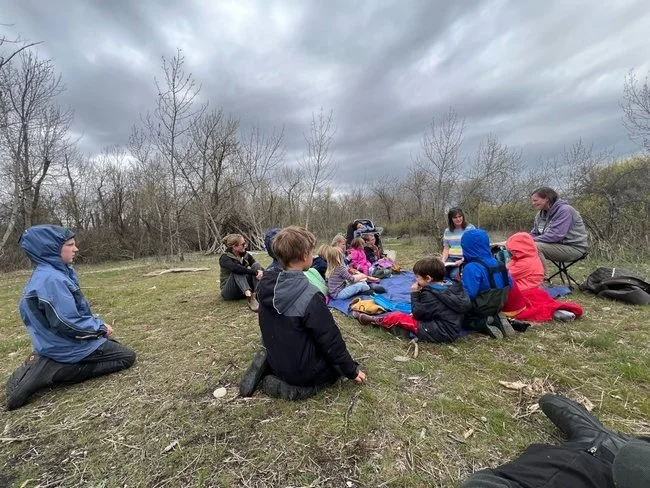
Learning under stratus clouds
Creating Clouds
To see this process up close, we made our own mini weather systems using plastic bags filled with a bit of river water and set them out in the sun. As the sun worked its magic, condensation started to appear—and before long, clouds began to form inside the bags!
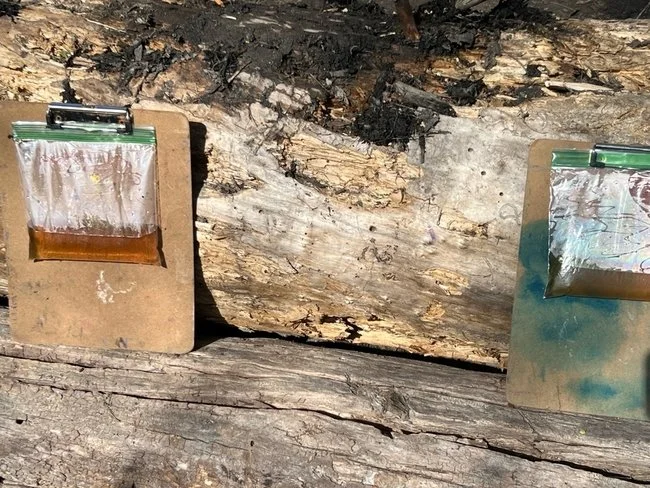
Clouds in a bag!
But the real excitement came when our tiny clouds gathered enough water to mimic rain. Drips began to fall inside the bags, showing how precipitation works when clouds get heavy enough. It was a simple, hands-on experiment that helped our students understand big concepts like the water cycle, evaporation, condensation, and rainfall—all while observing and playing in nature.
Rain Drop Density Experiment
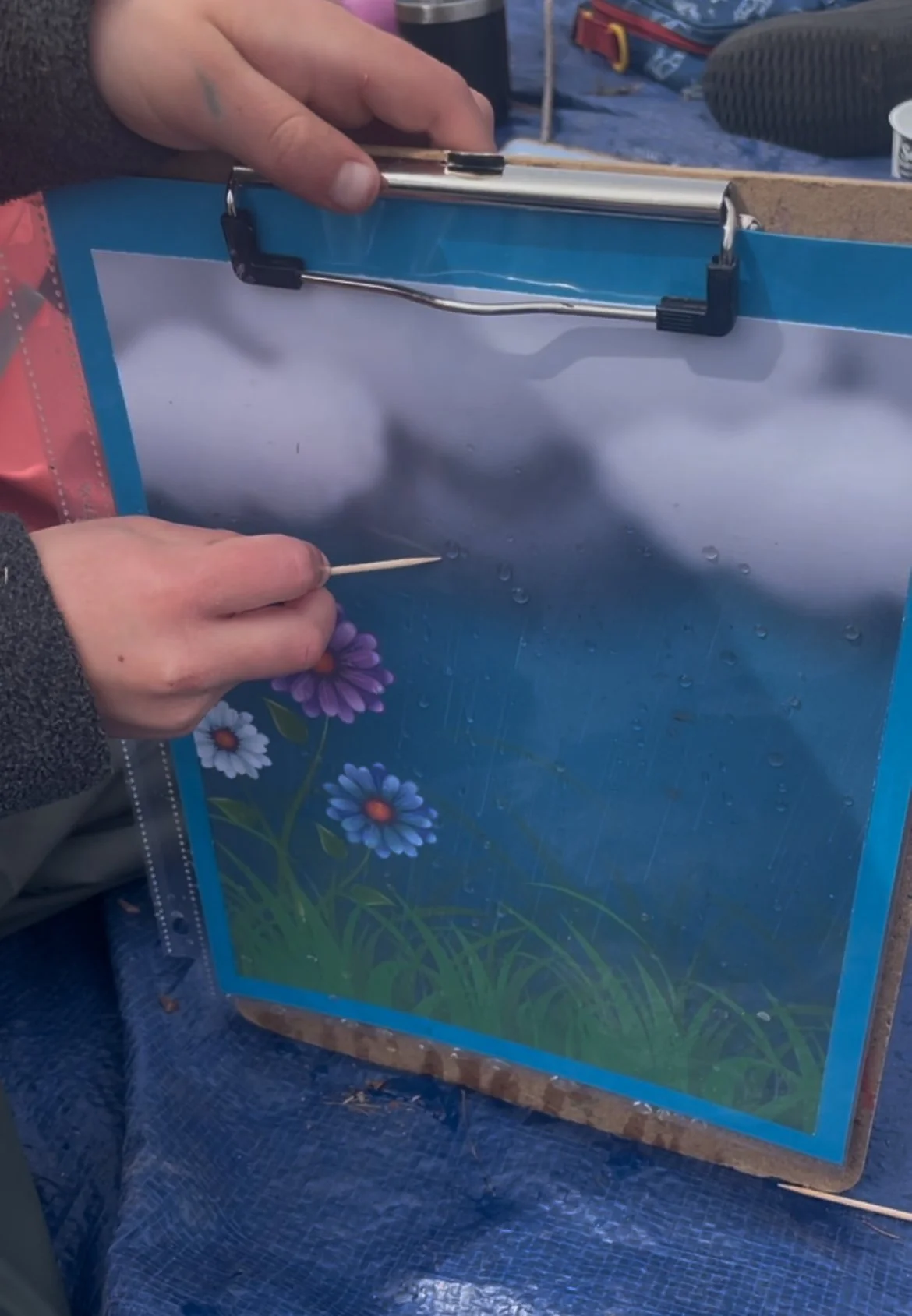
Making it rain!
In another fun hands-on lesson, our young learners became “clouds” themselves! Using toothpicks dipped in water, they touched the wet tips to an upright laminated photo of a spring meadow. As they experimented, they discovered that the toothpick had to soak up enough water—or the same spot had to be touched repeatedly—for the water droplets to become heavy enough to roll down the page like raindrops. This playful activity helped illustrate how clouds hold moisture until it becomes dense enough to fall as rain—making weather science both visual and fun!
By connecting science to everyday experiences, we’re helping children build a deeper understanding of the world around them. And what better way to learn about clouds and storms than to make them ourselves!