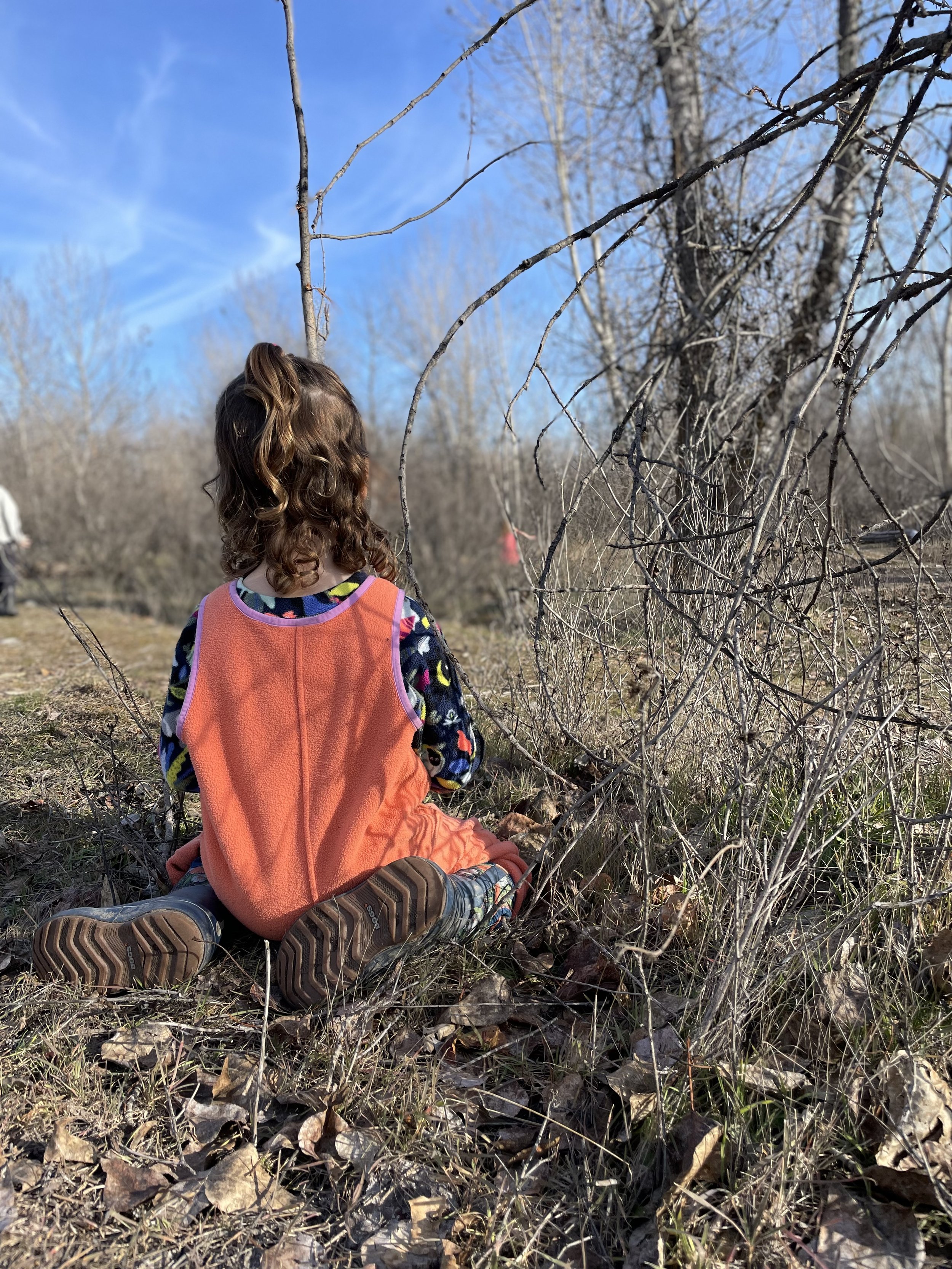
Why Forest School Works: The Benefits of Outdoor Learning for Kids in Boise
If you’ve ever watched a child turn a stick into a magic wand, a walking staff, and a science tool all in the same afternoon, you’ve already seen the power of outdoor learning.
At EverWild Forest School, we see it every day. Children who spend meaningful time outdoors build confidence, resilience, social skills, and academic readiness, all while believing they’re simply playing.
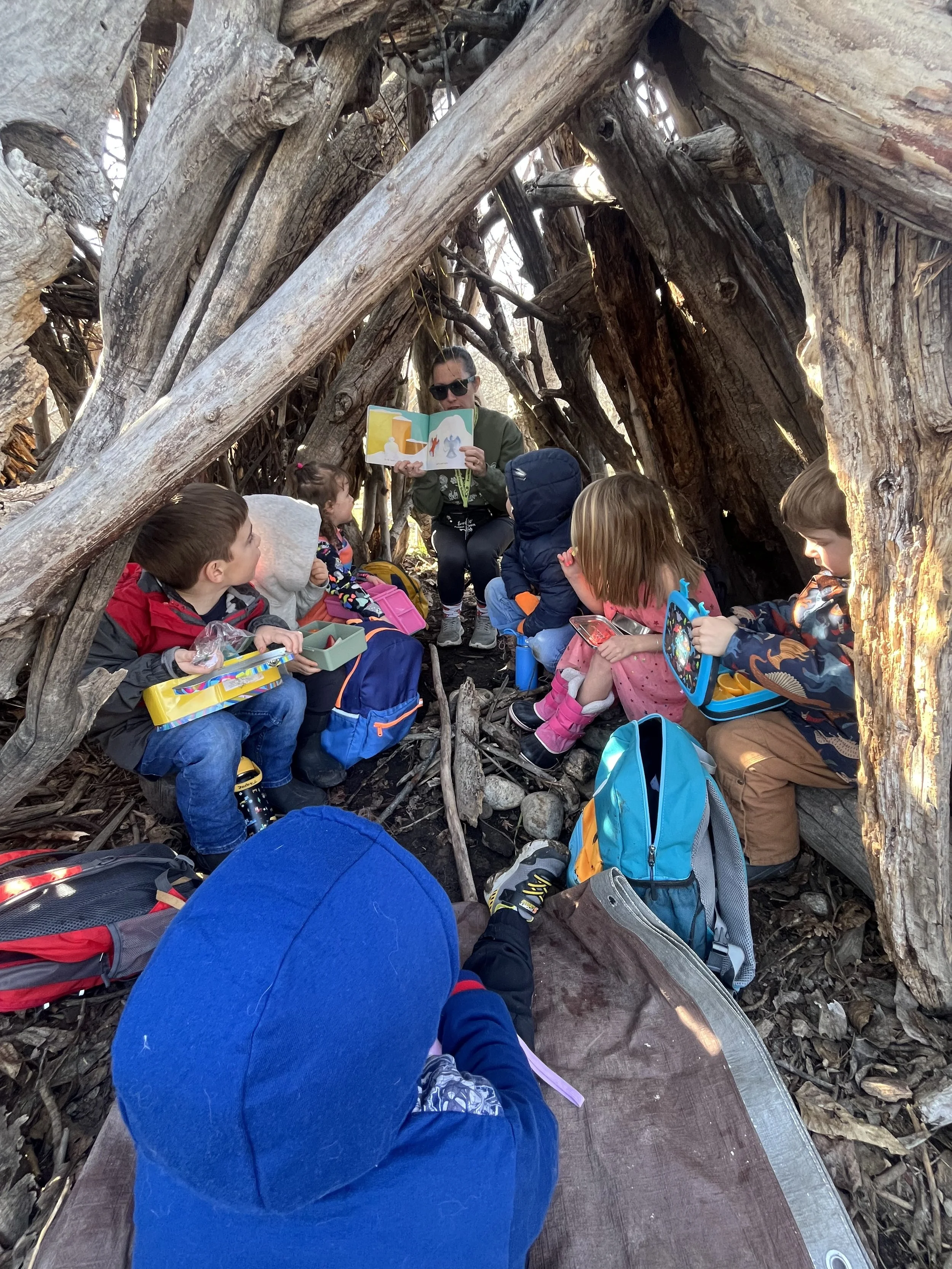
For families in Boise, Meridian, Eagle, Garden City (we even have families driving in from Mountain Home and Caldwell!) and across the Treasure Valley, forest school and nature-based education offer something many kids are missing: space to move, explore, and grow in the real world.
What Is a Forest School?
A forest school (also often called nature school or outdoor school) is an educational approach where learning happens primarily outdoors in natural settings, where hands-on experiences, risky play, and innate curiosity lead the process. Instead of desks and worksheets, children engage with:
Trees, soil, and water
Natural materials like sticks, rocks, and leaves
Real-life problem solving
Child-led exploration
At a forest school, the environment becomes the classroom. Lessons emerge from the seasons, the weather, and children’s curiosity.
For parents searching for an nature preschool in Boise or outdoor programs in the Treasure Valley, forest school blends play, science, movement, and social-emotional growth into one cohesive experience.
1. Outdoor Learning Builds Real Confidence
When children climb a log, cross a stream, or build a shelter, they’re doing more than playing: they’re developing competence, independence, resilience and more!
In a forest school setting, kids:
Assess risk (“Can I balance here?”)
Try, fail, and try again
Experience real accomplishment
This kind of confidence is different from praise for a worksheet. It’s earned through physical and emotional challenges. Over time, children begin to trust their own abilities, forming a foundation for resilience both in and out of school.
2. Nature Supports Emotional Regulation
Time in nature has been shown to reduce stress and improve mood in both children and adults. For kids, especially, the outdoors provides space to move big feelings through their bodies.
Climbing, digging, running, and building:
Release tension
Improve focus
Help kids reset after emotional moments
Many parents are surprised to see how children who struggle indoors thrive in an outdoor learning environment. The sensory-rich, open-ended setting supports nervous system regulation in a way four walls often cannot.
3. Social Skills Grow Naturally Outdoors
In traditional classrooms, social challenges often revolve around limited space, competition for materials, and long periods of sitting still.
In a forest school:
There is room to spread out
Materials are abundant and open-ended
Collaboration happens organically
Building a fort requires teamwork. Crossing a log bridge involves encouragement. Disagreements over sticks or space become real-time opportunities for communication and problem-solving with teacher guidance.
These are the foundations of empathy, negotiation, and leadership.
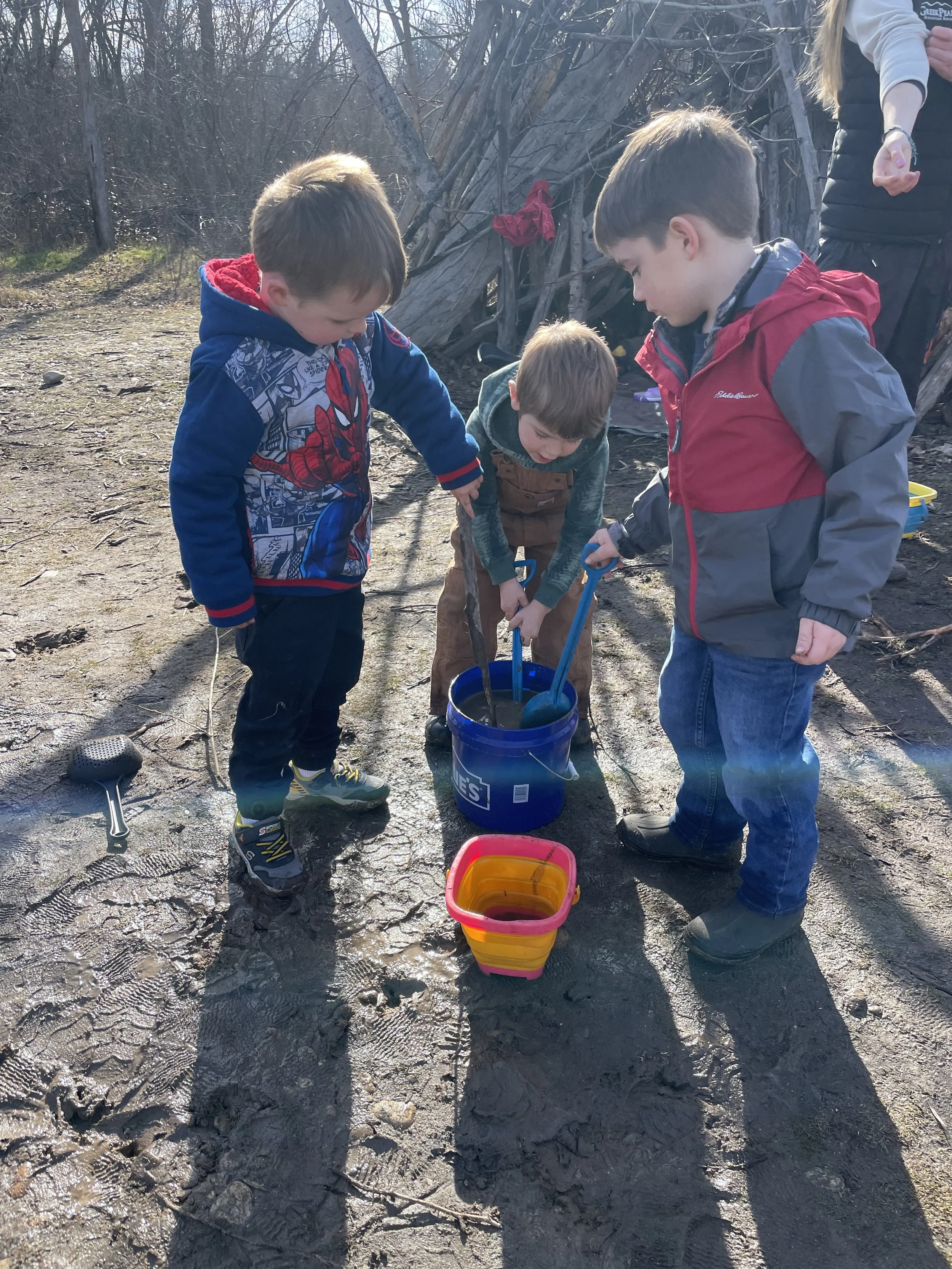
Social-Emotional Development
Children have time to practice cooperation, teamwork, empathy, communication, and patience
4. Academic Skills Still Thrive — Just Differently
Parents sometimes worry that outdoor programs mean less learning. In reality, nature-based education supports academic development in powerful, developmentally appropriate ways.
Children at forest school regularly practice:
Early math through counting, measuring, and pattern finding
Literacy through storytelling, journaling, and nature-based vocabulary
Science through observation of plants, animals, weather, and ecosystems
Instead of memorizing facts about nature, children experience it directly, which leads to deeper understanding and long-term retention.
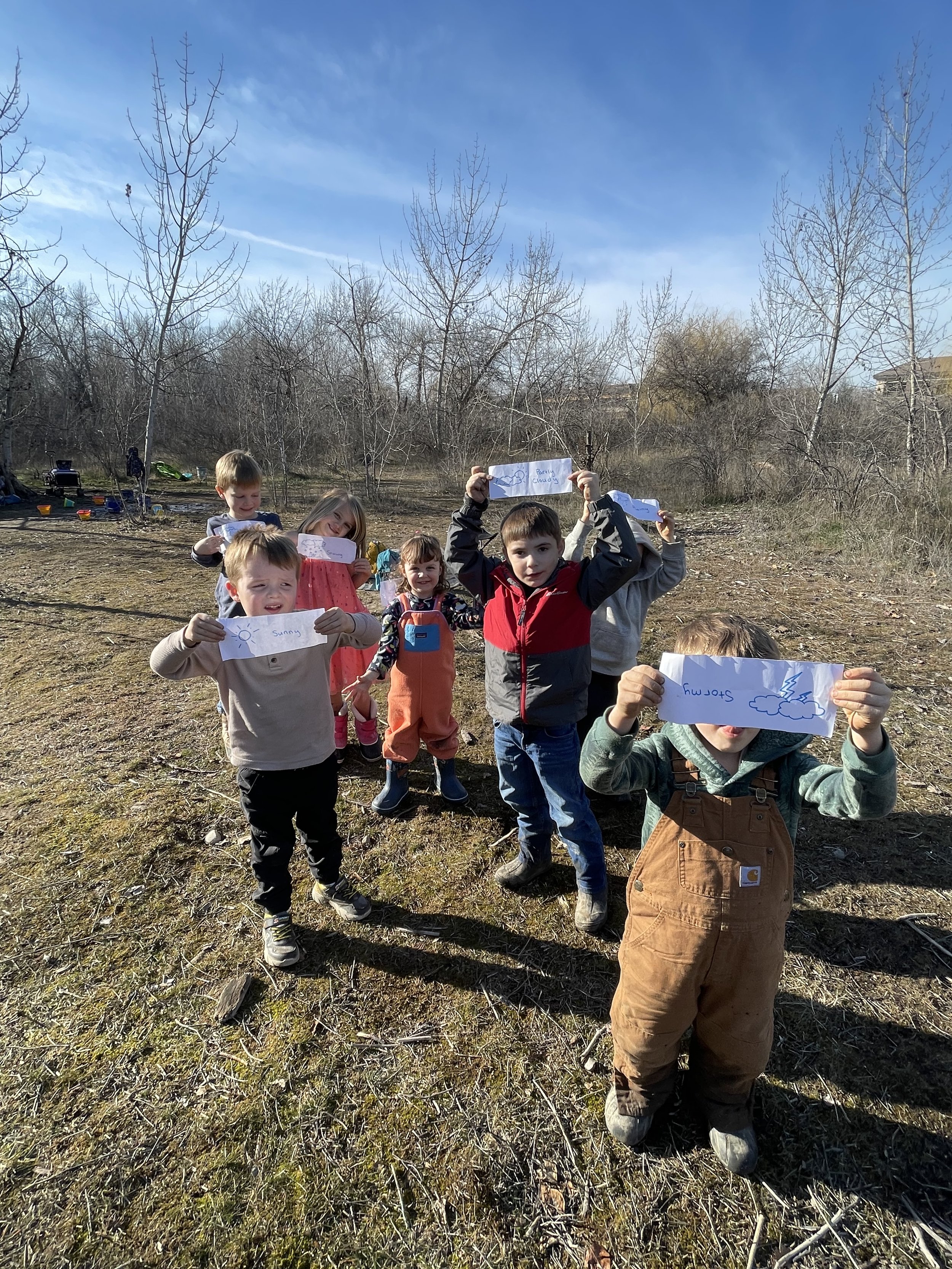
Enriching Academics
Nature school allows kids to learn naturally, and retain information better than conventional schooling.
5. Kids Develop a Lifelong Connection to Nature
Children who regularly explore local ecosystems are more likely to care about the environment as they grow. When kids know the names of the trees they climb and the birds they hear, nature becomes personal.
For families in Boise, outdoor education helps children:
Understand local landscapes
Feel comfortable outside in all seasons
Develop stewardship and respect for the natural world
This connection isn’t built through screens or textbooks. It’s built through muddy boots, wet sleeves, and hours of unstructured exploration.
6. Outdoor Programs Support Whole-Child Development
Forest school isn’t just about nature. It’s about supporting the whole child: physically, emotionally, socially, and cognitively.
Children in outdoor programs often show growth in:
Problem-solving skills
Creativity and imagination
Physical coordination and strength
Independence and self-help skills
These capacities support success in kindergarten and beyond, making forest school an excellent option for families looking for school readiness through play rather than pressure.
Why Families in Boise Are Choosing Forest School
More parents are searching for:
Nature school in Boise
Outdoor preschool near me
Nature-based homeschool enrichment
Outdoor summer camps in the Treasure Valley
They’re looking for balance in a world where childhood has become increasingly indoor, scheduled, and screen-based.
Outdoor education offers something refreshingly simple: time, space, and trust in children’s natural curiosity.
Experience Nature-Based Learning with EverWild
At EverWild, children learn through exploration, guided risk-taking, and deep connection to place. Our programs support kids in building confidence, community, and a genuine love of learning — all in the outdoors.
Whether you’re looking for an outdoor preschool in Boise, homeschool enrichment, or seasonal camps, nature-based education can give your child experiences that last far beyond childhood.
Because when kids are given room to roam, they don’t just grow — they thrive.